Answer
Jun 12, 2025 - 10:33 AM
What is a good TDS reading for drinking water?
Total Dissolved Solids (TDS) measures the concentration of dissolved substances in water, including minerals and salts, expressed in parts per million (ppm).
For drinking water, 50–300 ppm is a common range, although water outside that range isn't necessarily unsafe. The EPA recommends a secondary (aesthetic) limit of 500 ppm TDS, primarily because higher levels can affect taste and cause mineral deposits.
Does a low TDS reading mean better water? Not necessarily! A TDS meter measures dissolved solids, not bacteria, viruses, pesticides, or other specific contaminants. Even water with very low TDS can contain harmful microorganisms.
Why TDS Matters for Roving Blue's EO3® Water Purifiers
Roving Blue's electrolytic ozone technology uses naturally occurring minerals in water to conduct electricity and generate ozone.
For best performance, Roving Blue recommends approximately 50–350 ppm TDS. Very low-mineral water, such as distilled or deionized water, may not provide enough conductivity for effective ozone generation.
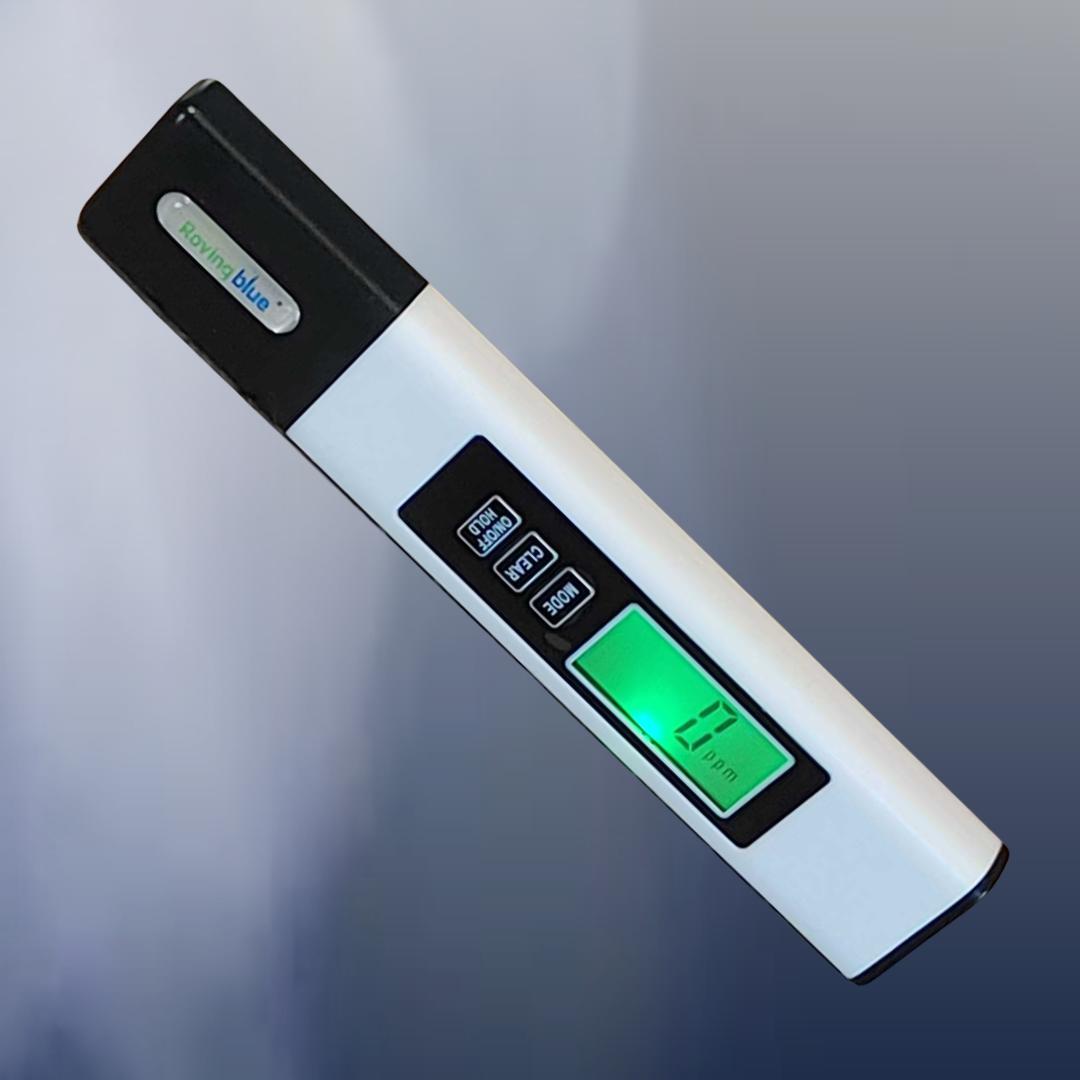
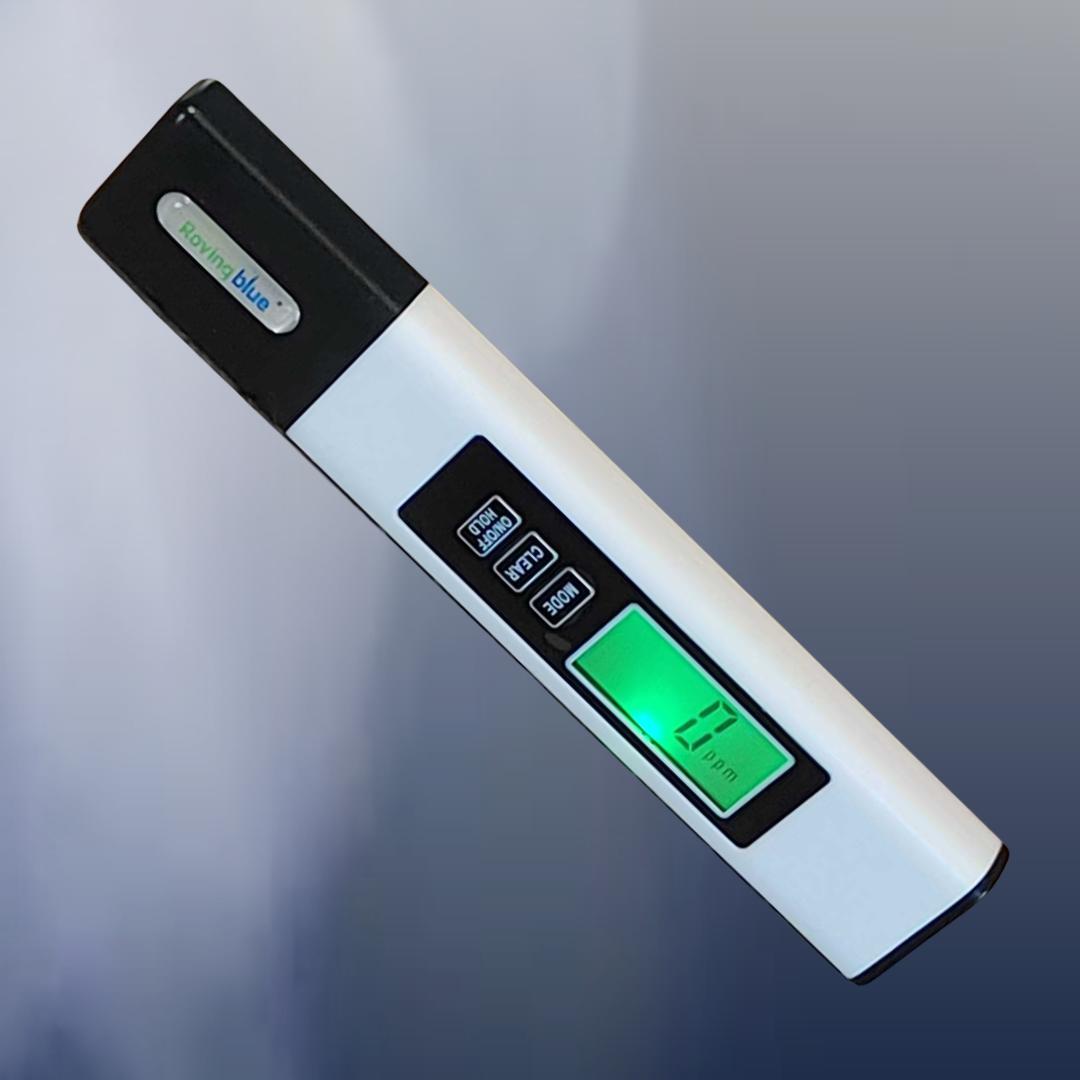
A simple TDS meter can help you determine whether your water is within the recommended operating range. Remember, a TDS meter measures dissolved solids, not dissolved ozone concentration.
Bottom line: TDS is useful for understanding water's mineral content and its suitability for electrolytic ozone purification, but it does not tell you whether water is safe to drink.
Source: Reference: EPA — Secondary Drinking Water Standards



Add New Comment